
Why the spec sheet is not enough
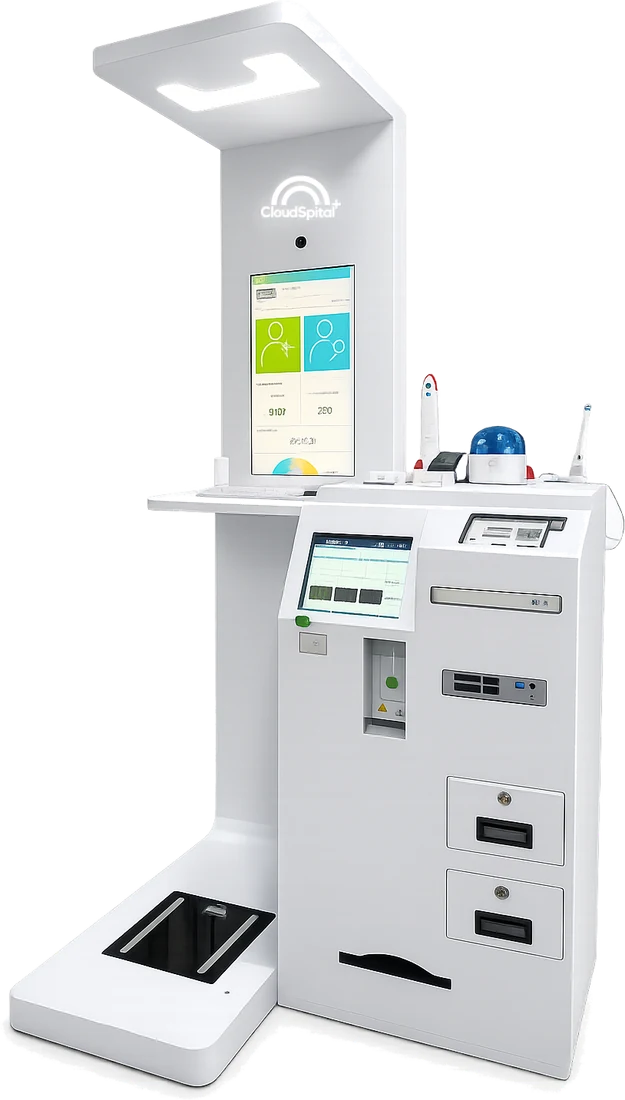
From the outside, most Health ATMs look much the same: a screen, a seat, a blood pressure cuff and a printer. What really matters is inside the machine and in the support behind it. When buyers ask us which health ATM features to compare, we suggest you start with who will use the kiosk and what should happen after each reading. Don't start with the longest test list.
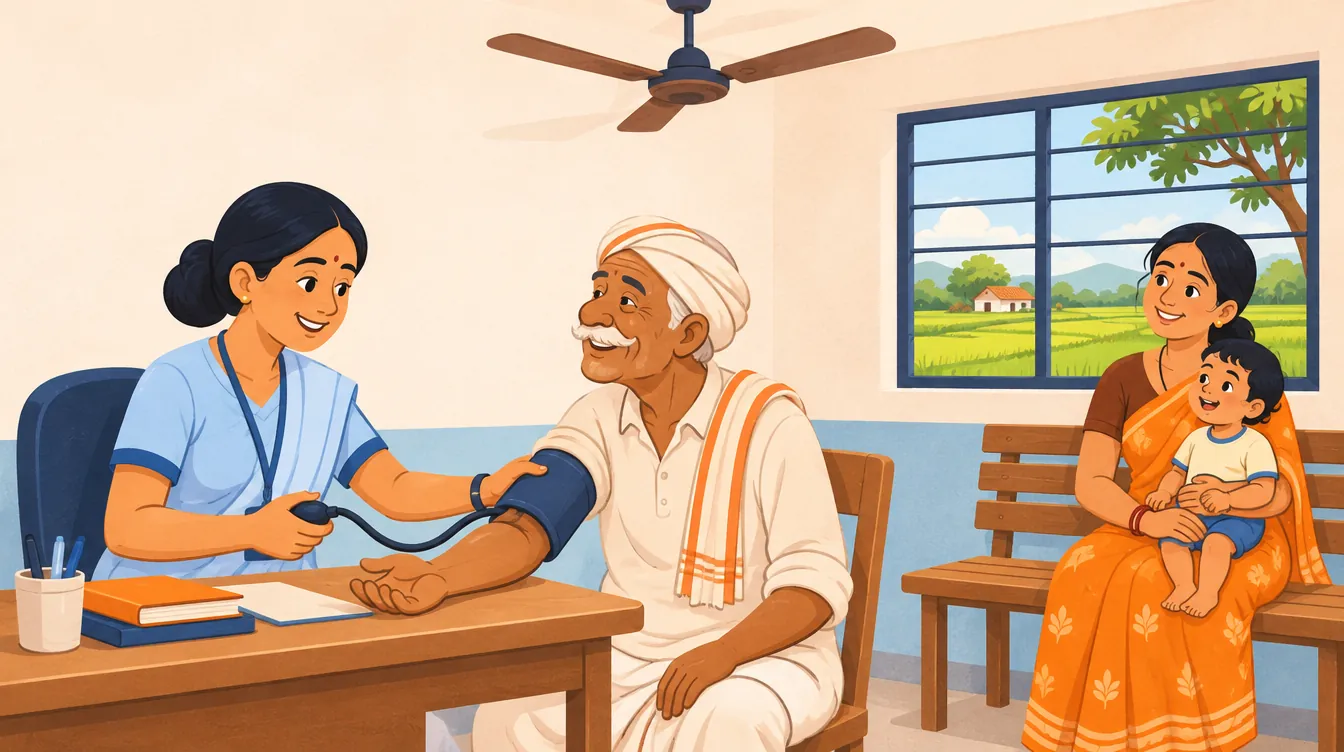
Some background helps. Under the National Health Mission, India's population-based screening for common non-communicable diseases is aimed at people over 30. Frontline health workers do the screening and refer people on for care. A kiosk is most useful when it fits into that kind of chain: screen, record, send to a doctor, follow up.
- NCD screening target group (NHM)
- People over 30 years
- ABDM launched
- September 2021
- DPDP Act enacted
- 11 August 2023
- DPDP Rules notified
- 14 November 2025
For a wider view of how makers differ, see our guide to Health ATM brands and manufacturers in India. Below are the nine things we would check on any kiosk.
1 to 3: tests, devices and speed
1. The test menu, and whether it fits your need
The number of tests varies a lot from kiosk to kiosk. Ask which clinical panels the menu covers, not just the total. A workplace or housing society may need vitals, blood sugar and a lipid profile. A tribal block or district programme may need a complete blood count and sickle cell screening. A bigger menu is only worth having if someone will act on the results.
2. Built-in devices or add-ons
Find out whether the devices are built into the kiosk and its software, or plugged in separately. Built-in devices send their readings straight into one report, so staff type in less by hand and there are fewer chances of a mix-up. Ask for the full device list for each model.
3. Speed and flow
Ask for the time each test takes, not one headline figure. On Cloudspital kiosks, quick finger-prick tests such as blood glucose and haemoglobin give a result in about 15 seconds. The face scan takes 30 seconds, urine analysis takes about 3 minutes, and most results are ready within minutes.
Point-of-care tests need regular quality checks. A peer-reviewed review of point-of-care testing in primary care recommends two kinds: internal quality control and external quality assessment. It also stresses training for the people who run the devices.
4 and 5: the doctor and the person at the screen
4. A doctor in the loop
A kiosk screens and measures, and a doctor reviews the results and decides. Ask how a doctor sees the results, whether the consultation happens on video, and whether the doctor can write an e-prescription. Without this step, people leave with a page of numbers and no idea what to do next.
5. Voice guidance and language
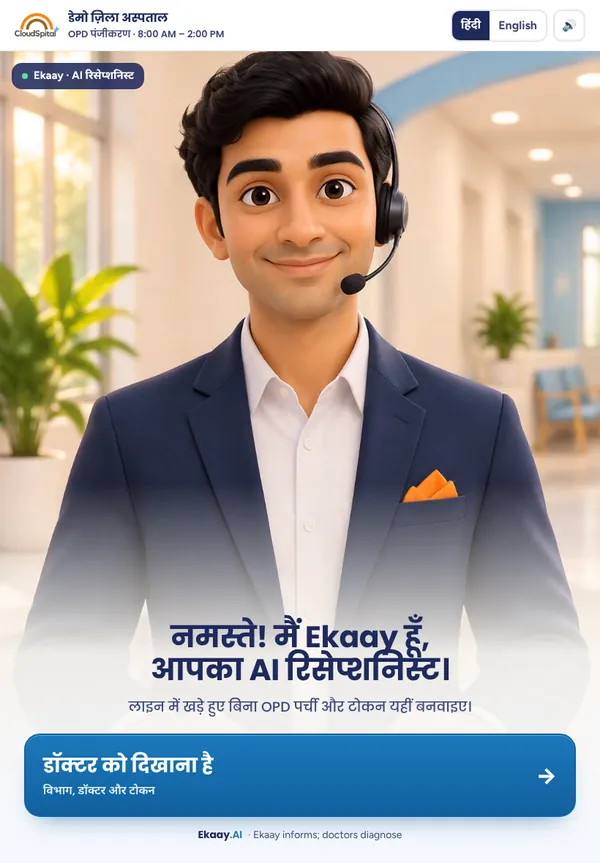
Many users will be first-time visitors, older people, or people who prefer Hindi or a regional language. Voice guidance that talks them through each step takes pressure off the operator and means fewer tests need repeating.
6 to 8: reports, connectivity and data
6. How reports reach people and their doctors
A printed report is a good start. Also ask whether the report reaches the person on their phone, and whether it is saved to a cloud record that a doctor or programme team can look up later on a dashboard.
7. What happens when the internet drops
The internet is patchy in many blocks, and even in some city buildings. If a kiosk stops working when it goes offline, a whole camp day can be lost. Ask whether it keeps screening without a connection and uploads the records later.
8. Where health data is kept, and who sees it
India's Digital Personal Data Protection Act, 2023 came fully into force when the DPDP Rules were notified in November 2025. Ask where the data is stored, how consent is taken and who can see a person's results. If ABHA linking matters to you, ask the maker to confirm its current status in writing.
9: the maker and the service promise
A kiosk only helps on the days it works. Get these written into the contract, not just promised on a sales call:
- Delivery and installation timelines
- How long the warranty lasts, and whether it is comprehensive and on site
- An uptime commitment, and how it is measured
- How fast remote support responds, and how soon an engineer visits
- How many years spare parts will be available
- Whether the maker builds the kiosks itself, and where
Our page on after-sales service explains what to expect in more detail.
How Cloudspital answers these nine points
Here is how Cloudspital's CPL-HA range measures up against the checklist. For the full picture, see why Cloudspital.
- Tests: 10 Health ATM models, covering 48 to 170 tests and parameters. The flagship Arc Max (CPL-HA-10) has 170 tests in 18 clinical panels, including a CBC with 3-part differential, liver and kidney function tests and sickle cell screening. You can compare every model on our models page.
- Devices: Arc Max has 22 medical devices built in.
- Face scan: a 30-second, contactless AI face scan gives 28 wellness indices using clinically validated technology. These are wellness indices, not a medical finding.
- Doctor: a doctor reviews results on video and can write an e-prescription.
- Reports: reports print at the kiosk and reach people by SMS and WhatsApp. They are also saved as cloud records, with a dashboard.
- Offline: kiosks keep working offline and sync the records later.
- Language: voice guidance in English, Hindi and regional languages.
- Data: stored in India on AWS Mumbai, in line with the DPDP Act 2023. ABHA linking is still being built.
- Service: delivery in 10 days and installation in 7 days. A 5-year comprehensive on-site warranty and 95% quarterly uptime. Online checks and desktop support within 24 hours of a complaint, an engineer on site within 7 to 10 working days, and spares for 7 years.
Cloudspital builds its kiosks at its own facility in Greater Noida, Uttar Pradesh, which can make 300 units a month. The company was founded in 2020. It is a DPIIT-recognised startup and a GeM OEM vendor, and its Health ATMs are in use at government sites across India.
Your next step
- Write down who will use the kiosk, where it will stand, and what should happen after each reading.
- List the tests you will actually act on, then pick the smallest model that covers them.
- Send the nine questions above to every maker on your shortlist and ask for written answers.
- Watch a kiosk working before you decide.
To see how a Cloudspital Health ATM handles each of the nine points, book a demo or request a written quote. Each model also has its own brochure to download from its page.
Sources
- Update on progress achieved under NPCDCS, Press Information Bureau, Government of India
- Analytical performance specifications and quality assurance of point-of-care testing in primary healthcare, PubMed (National Library of Medicine)
How this article was made: drafted with AI assistance, checked against the sources above, and read and approved by the Cloudspital team before publishing. It is general information, not medical advice.