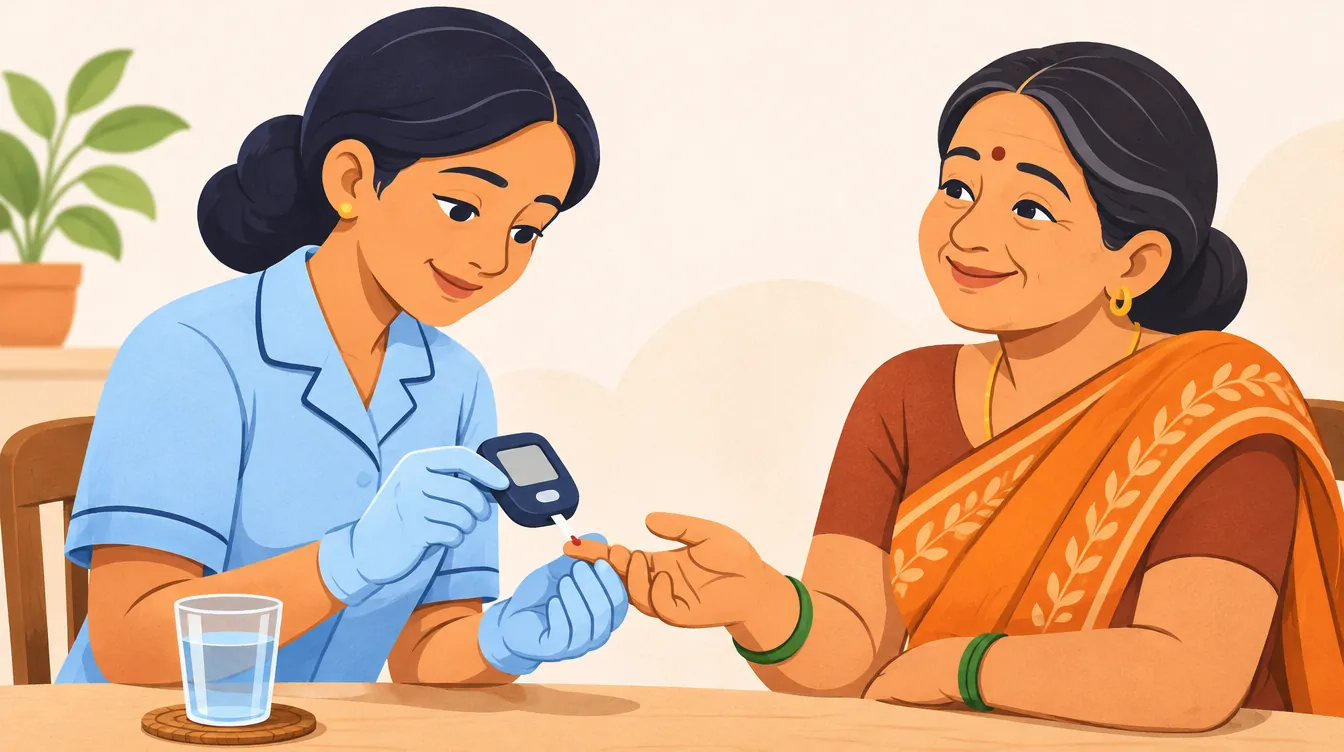


Why a railway station suits walk-up screening
A health ATM at a railway station reaches people where they already are, often with time to spare. According to the Press Information Bureau, Indian Railways carried around 741 crore passengers in 2025–26. Many travellers arrive early and wait in the concourse, and plenty of them rarely visit a clinic unless something hurts.
That matters because common chronic conditions are often silent. The ICMR-INDIAB study found hypertension in 35.5% of adults aged 20 and above. Raised blood pressure seldom causes symptoms, so a reading taken while waiting for a train can be the first prompt to see a doctor.
Stations have tried this before. Indian Railways installed health ATMs at Lucknow's Charbagh station, staffed by a medical attendant. In March 2024 it also opened 50 Pradhan Mantri Bhartiya Janaushadhi Kendras in station premises to support passenger wellness. Our guide to health kiosks for railway stations covers this setting in more depth.
- Passengers carried, 2025–26
- About 741 crore (PIB)
- Indian Railways employees
- 11,75,925 as on 1 February 2023 (PIB)
- Adults 20+ with hypertension
- 35.5% (ICMR-INDIAB)
- Janaushadhi Kendras at stations
- 50, opened March 2024 (PIB)
Who walks up to a station kiosk
A station serves two very different groups, and the kiosk should be planned for both.
- Waiting passengers: long-distance travellers with time before departure, often with older family members who are curious about their blood pressure or sugar.
- Daily commuters: people who pass the same kiosk every day and can track a reading over weeks instead of relying on one number.
- Railway staff: Indian Railways had over 11.75 lakh employees in 2023, many working shifts that make clinic visits hard.
- The station workforce: licensed porters, vendors, cleaning staff and drivers at the forecourt, who are often among the people least likely to get a regular check-up.
One-time passengers need speed and a report they can take with them. Repeat users, such as staff and commuters, gain more from a record that builds over time.
Which tests matter at a station
For passengers: a five-minute menu
- Blood pressure and pulse
- Oxygen saturation (SpO2) and temperature
- Height, weight and BMI
- Random blood sugar by finger-prick
- An optional 30-second contactless face scan for wellness indices
For staff and commuters: planned screening days
When people have an appointment and no train to catch, longer tests make sense. These include HbA1c for average blood sugar, a lipid profile, an ECG and haemoglobin for anaemia. Schedule these days around shift changes so nobody has to leave their duty.
A kiosk screens and measures; a doctor reviews and decides. Face-scan readings are wellness indices, not a diagnosis. Kiosk screening does not replace any medical examination the railways require for safety roles.
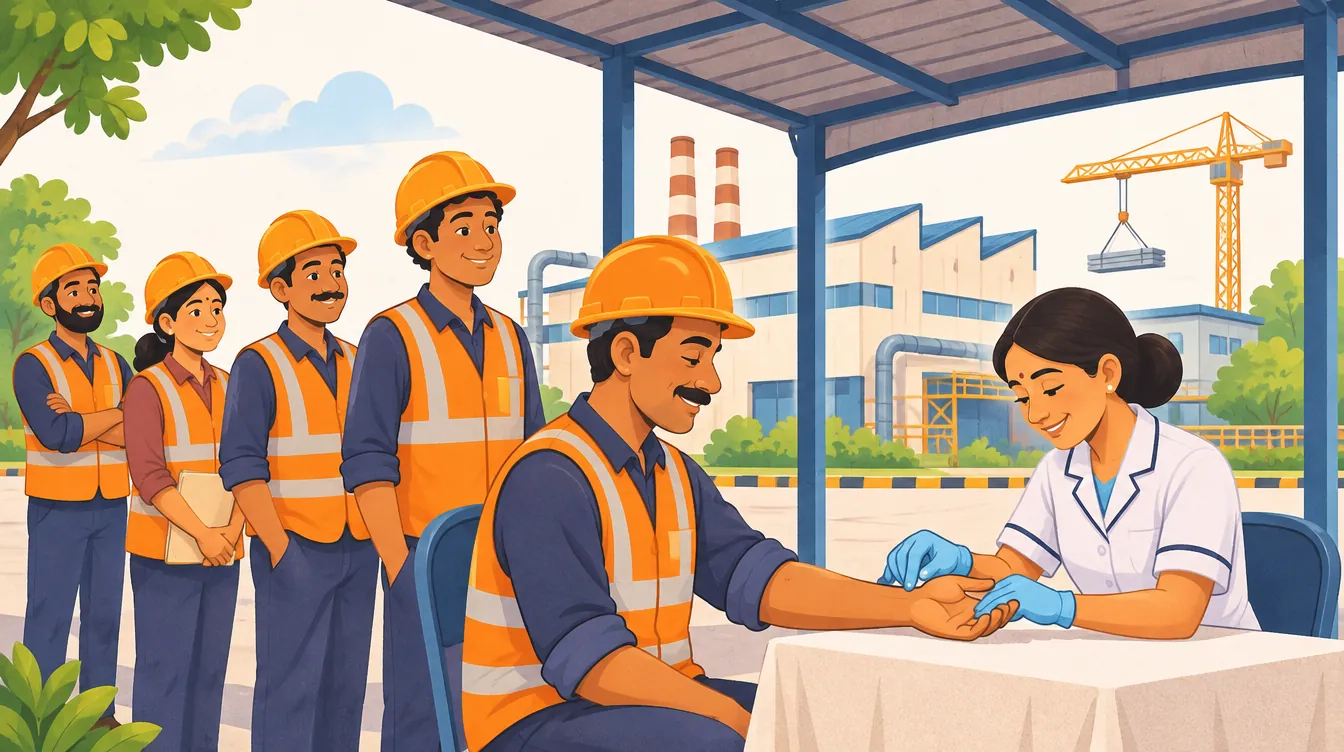
Who runs the kiosk, and where it stands
A station kiosk should not be left unattended at busy hours. A trained attendant makes the difference between a machine people only look at and one they actually use.
- Guides first-time users and helps older travellers through each step
- Keeps the finger-prick clean and safely disposes of lancets and strips
- Cleans cuffs and contact surfaces between users
- Keeps consumables stocked and reports any fault quickly
- Sends anyone with a worrying reading to a doctor, and calls for help in an emergency
Place the kiosk in the concourse or near a waiting hall, not on a narrow platform where crowds surge when a train arrives. It needs steady power, shade, a privacy panel and clear signs in the local language. The railway division allots station space under its own commercial rules, so speak to the divisional commercial team before you buy anything.
How results reach a doctor and the traveller
At a station, the person may be on a train ten minutes after the test, so the report has to go with them.
- Print at the kiosk for anyone who wants a paper copy.
- Send by SMS and WhatsApp before the person walks away, so the report reaches their phone even if the printout is lost.
- Link to ABHA with consent, so the record goes home with them and a local doctor can see it. See how ABHA integration works.
- Offer a video consultation for out-of-range readings, with a doctor who reviews the results and can issue an e-prescription.
- Act on red flags at once instead of finishing the test menu.
Chest pain, severe breathlessness, fainting or confusion are emergencies. Stop the screening, alert station staff and call 112 or 108.
Mobile signal can be patchy inside large stations and at smaller halts. Choose a kiosk that works offline and syncs records when the connection returns.
Where Cloudspital fits
Cloudspital makes AI Health ATMs at its own facility in Greater Noida, with 10 models covering 48 to 170 tests. A compact entry model suits a busy concourse with a short passenger menu. Larger models, with CBC and liver and kidney function tests, suit a railway health unit running staff screening days. The AI Health Pod is a walk-in booth that gives more privacy. You can compare them on our Health ATM models page.
Cloudspital kiosks are voice-guided in English, Hindi and regional languages. They print reports and send them by SMS and WhatsApp, link with ABHA, connect to a doctor on video and work offline. Data is hosted in India and aligned with the DPDP Act 2023. Service includes a 5-year comprehensive on-site warranty, 24-hour response and 72-hour resolution. That matters at a site that runs from early morning to late night. Cloudspital has more than 1,500 units in government installations across India.
A short checklist before you start
- Agree the site and permissions with the railway division.
- Decide who the kiosk is mainly for: passengers, staff or both.
- Set a short passenger menu and a longer staff menu.
- Name the attendant, the working hours and the doctor who reviews results.
- Write down what happens when a reading is out of range or someone feels unwell.
For more on planning a station site, read our railway station Health ATM guide. When you are ready, book a demo or request a written quote for the models that fit your station.
Sources
- From Steam to Speed: The Ever-Evolving Journey of Railways, Press Information Bureau, Ministry of Railways
- Metabolic non-communicable diseases in India: time to act, The Lancet Diabetes & Endocrinology
- Lucknow Railway Station Gets Health ATMs, Outlook Traveller
How this article was made: drafted with AI assistance, checked against the sources above, and read and approved by the Cloudspital team before publishing. It is general information, not medical advice.