
What a lipid profile measures
A lipid profile kiosk runs one of the most common blood tests in medicine. It measures how much fat, or lipid, is in your blood. Lipids are not bad in themselves: your body needs cholesterol to build cells and make hormones. The trouble starts when the balance tips, and fatty deposits slowly build up in the walls of the arteries that feed the heart and brain.
- Total cholesterol: all the cholesterol carried in your blood.
- LDL cholesterol: often called 'bad' cholesterol, because high levels add to the build-up in artery walls.
- HDL cholesterol: often called 'good' cholesterol, because it helps carry cholesterol away from the arteries.
- Triglycerides: a type of fat that rises with excess calories, sugar, alcohol and some health conditions.
The World Health Organization describes dyslipidaemia as raised total or LDL cholesterol, raised triglycerides or low HDL cholesterol. It calls dyslipidaemia one of the main modifiable risk factors for cardiovascular disease. Modifiable is the key word: food, activity, weight and treatment chosen by a doctor can all change these numbers. You can only act on them once you know them, though, and high cholesterol usually causes no symptoms.
Why lipid screening matters in India
The ICMR-INDIAB study is India's national survey of diabetes and other metabolic conditions. Its 2023 report in The Lancet Diabetes & Endocrinology found dyslipidaemia in 81.2% of adults. Most of that burden came from low HDL cholesterol. The study also found that metabolic conditions are rising in rural India, not only in cities.
- Adults with dyslipidaemia in India
- 81.2% (ICMR-INDIAB-17, 2023)
- Adults with high cholesterol in India
- 21.3 crore (ICMR-INDIAB estimate, 2021)
- Adults with high LDL cholesterol in India
- 18.6 crore (ICMR-INDIAB estimate, 2021)
- Adults worldwide with raised total cholesterol
- 39% (WHO)
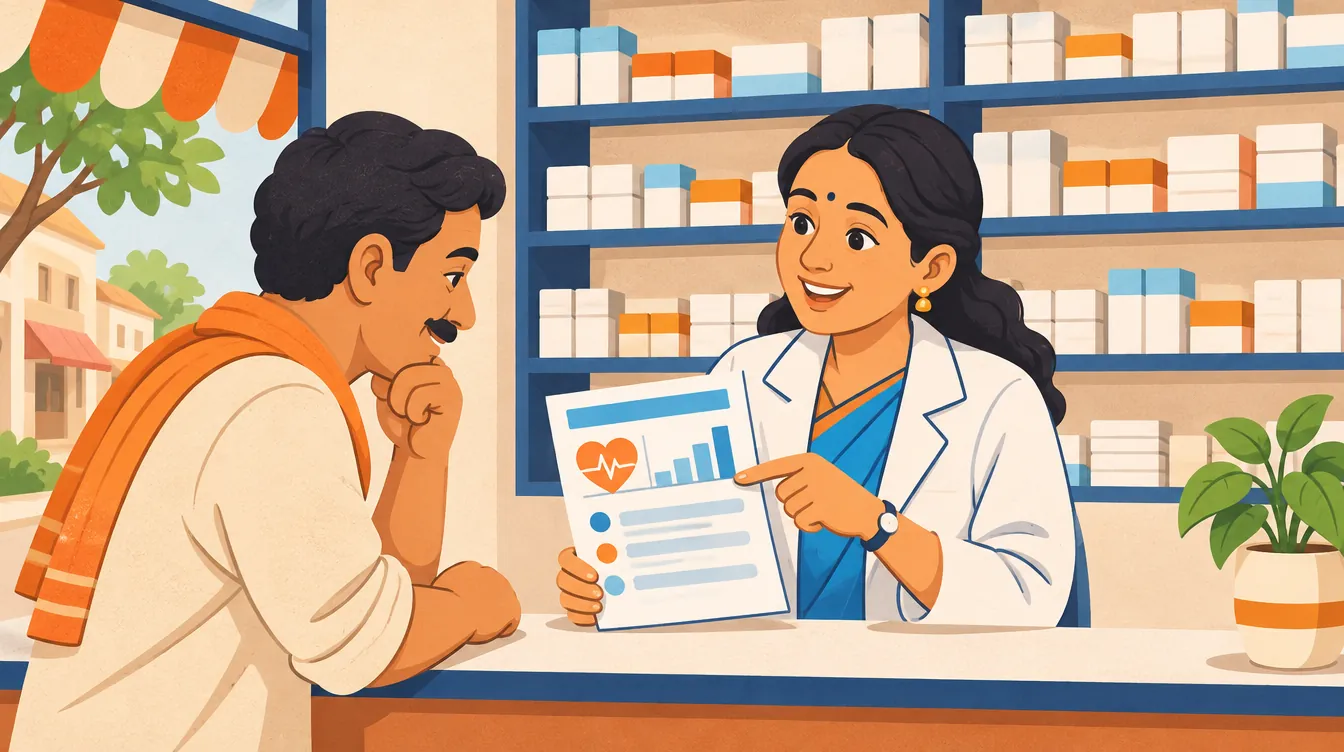
Researchers who later analysed the ICMR-INDIAB data pointed out what these estimates mean. About 21.3 crore Indian adults had high total cholesterol and about 18.6 crore had high LDL as of 2021. Most of these people will not know it. The WHO also notes that familial hypercholesterolaemia, an inherited form of very high cholesterol, affects an estimated 1 in 250 to 1 in 300 people. Most people with it are not identified until they have a first heart attack. Screening where people already are, such as a PHC, a workplace, a pharmacy or a housing society, helps close that gap.
Reading your numbers
Lab reports in India usually show lipids in mg/dL. The ranges below are the widely used adult classifications from the US National Cholesterol Education Program (ATP III). They are general reference points and are not personal targets.
- Total cholesterol: below 200 is desirable; 200–239 is borderline high; 240 or above is high.
- LDL cholesterol: below 100 is optimal; 100–129 is near optimal; 130–159 is borderline high; 160–189 is high; 190 or above is very high.
- HDL cholesterol: below 40 is low; 60 or above is high, which is considered protective.
- Triglycerides: below 150 is normal; 150–199 is borderline high; 200–499 is high; 500 or above is very high.
Your own target depends on your overall risk: your age, blood pressure, blood sugar, smoking, family history and any heart disease you already have. People with diabetes or heart disease are often given much lower LDL goals. Only your doctor can set the right target for you.
Do you need to fast?
Not always. The American College of Cardiology summarises an expert consensus that non-fasting lipid profiles can be used for most people. In large studies, the difference from fasting results was not clinically significant: up to about 26 mg/dL for triglycerides and 8 mg/dL for the cholesterol values. A doctor may still ask for a fasting sample, for example when triglycerides are very high. Follow the instructions you are given at the screening site.
When to see a doctor
A screening result is a starting point, not a verdict. Book a doctor's review if:
- Any value falls outside the desirable ranges above, even if you feel well.
- Your LDL is 190 mg/dL or higher, or a close relative had a heart attack at a young age. Both can point to an inherited cholesterol problem.
- You also have diabetes, high blood pressure or kidney disease, or you smoke.
- Your triglycerides are very high. This needs prompt medical attention.
- You already take medicine for cholesterol and your numbers have changed. Never stop or change medicine on your own.
Chest pain, pain spreading to the arm or jaw, sudden breathlessness, or sudden weakness or slurred speech are emergencies. Call 112 or 108 straight away. Do not wait for a test.
How a lipid profile kiosk runs the test
A Health ATM brings a lab-style lipid profile out of the laboratory, using point-of-care testing: a small analyser gives results on the spot instead of sending a sample away. On a Cloudspital Health ATM such as the CPL-HA-03 check-up kiosk with lipid profile, the steps generally go like this:
- The person registers at the kiosk. A voice guides them in English, Hindi or a regional language.
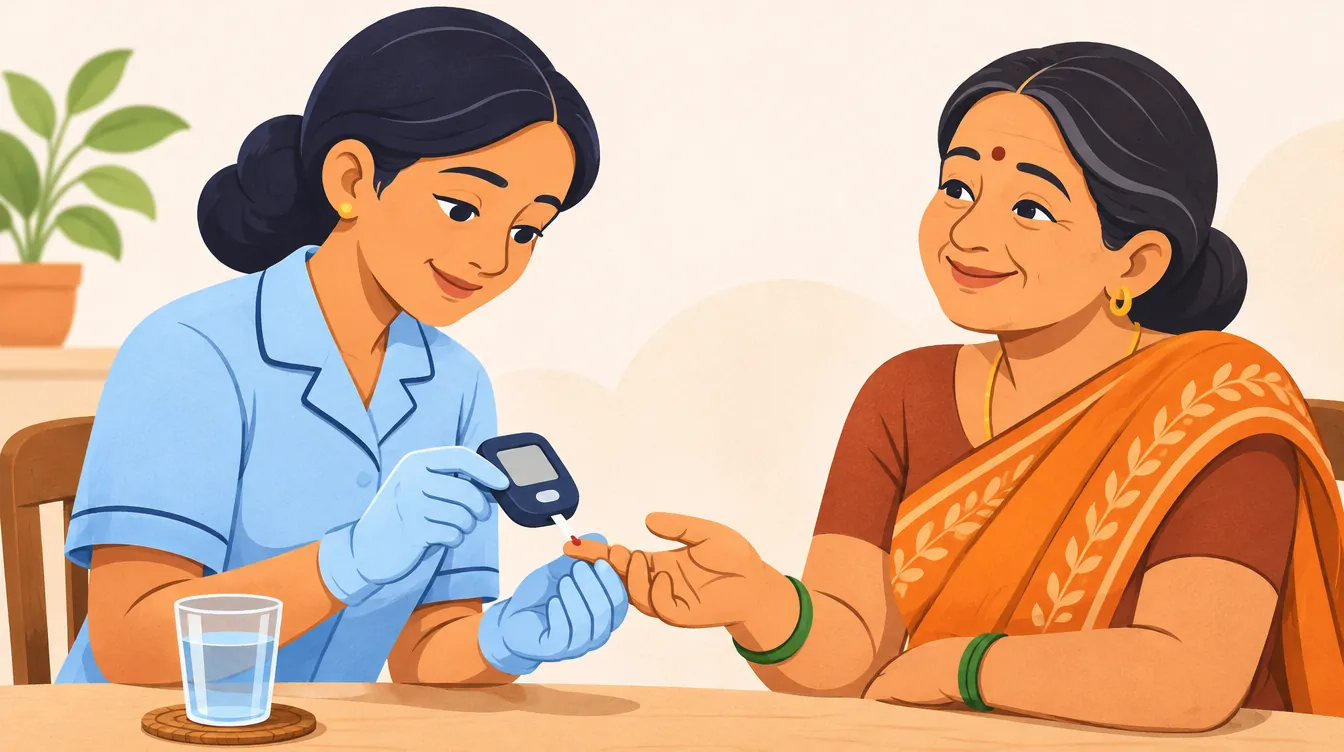
- A fingertip is cleaned and pricked, and a few drops of blood go to the kiosk's lipid analyser.
- While the analyser works, the person can carry on with other checks, such as blood pressure, weight and body composition.
- The lipid values are added to the person's report, which prints at the kiosk and reaches them by SMS and WhatsApp.
- A doctor can review the results on video and, if needed, give advice or an e-prescription.
Finger-prick results are screening values. If a reading is abnormal, the doctor may ask for a venous blood test at a lab to confirm it before deciding on treatment. That is how screening and diagnosis are meant to work together. Read more about point-of-care testing and how it fits into primary care.
Bringing lipid screening to your site
For a health department, CSR team, HR head or clinic owner, adding lipids to a check-up changes who you can reach. A busy worker or a villager who would never go to a lab for a cholesterol test can get one during a routine visit. Programmes in corporate wellness and NCD screening often pair lipids with blood pressure and blood sugar, because the three risks tend to come together.
Cloudspital makes its Health ATMs in Greater Noida. The CPL-HA range has 10 models running from 48 to 170 tests and parameters. The 54-test CPL-HA-03 lipid profile kiosk adds a lipid profile to the core check-up. Reports can link to ABHA and are stored in cloud records hosted in India. The kiosk works offline and syncs later, and a doctor reviews results on video. Each model has a downloadable brochure listing its exact parameters, and the full list of Health ATM tests explains what each panel covers.
Next step: list the sites you want to cover, how many people you expect each day and the panels they need. Then book a demo or request a written quote so the model matches the programme.
Sources
- Metabolic non-communicable disease health report of India: the ICMR-INDIAB national cross-sectional study (ICMR-INDIAB-17), The Lancet Diabetes & Endocrinology
- Prevalence of dyslipidemia in India: The ICMR-INDIAB National Study (ICMR-INDIAB-25), Journal of Clinical Lipidology (ScienceDirect)
- Dyslipidaemia fact sheet, World Health Organization
- Third Report of the National Cholesterol Education Program (ATP III) Executive Summary, National Heart, Lung, and Blood Institute
- Fasting Not Routinely Required for Determination of a Lipid Profile, American College of Cardiology
How this article was made: drafted with AI assistance, checked against the sources above, and read and approved by the Cloudspital team before publishing. It is general information, not medical advice.