
What ABHA and ABDM are
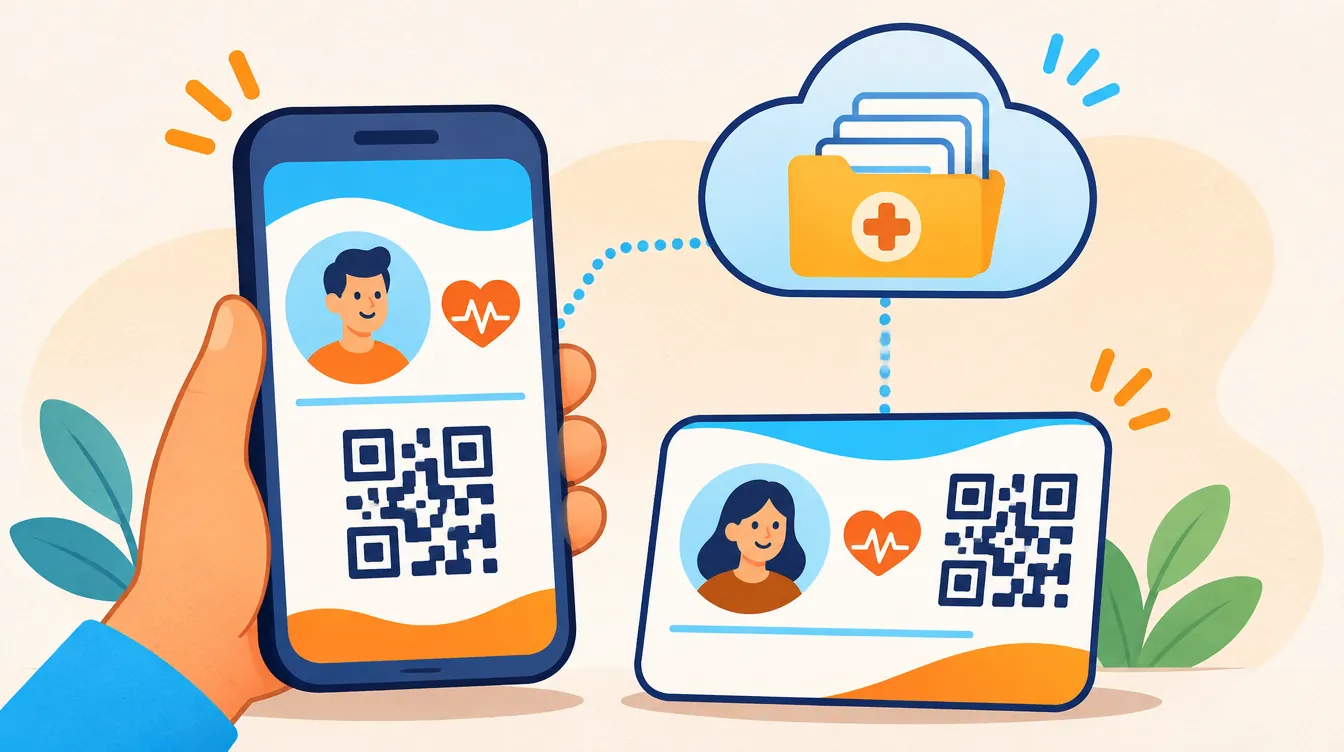
An ABHA kiosk builds on two pieces of public infrastructure. The Ayushman Bharat Health Account (ABHA) is a person's health ID under the Ayushman Bharat Digital Mission (ABDM), which the National Health Authority (NHA) runs. The government says ABDM aims to make health data work across systems and to build lifelong electronic health records for every citizen.
Along with ABHA, ABDM keeps registries of health facilities (HFR), healthcare professionals (HPR) and drugs. One point surprises many buyers: ABDM does not store medical records. Records stay with the hospital, lab or screening site that created them. ABDM provides the IDs, the registries and a consent manager that moves records between providers when the person agrees.
- ABHA accounts created
- Over 93 crore (PIB, 2026)
- Health records linked with ABHA
- Over 104 crore (PIB, 2026)
- ABHA-linked tokens issued at health facilities
- Over 23.21 crore, as on 18 June 2026 (PIB)
How record linking works
Registration is only half the job. The other half is getting a report into the person's health history. ABDM gives each party one of three roles:
- Health Information Provider (HIP): the facility that creates a record, such as a hospital, a lab or a screening point run by a facility. With the person's consent, it links the record to their ABHA.
- Health Information User (HIU): a doctor or facility that asks to see the person's earlier records.
- Consent manager: the part of ABDM that handles each request and gets the person's approval before any record moves.
According to PIB, facilities that use ABDM-enabled software can create records linked to ABHA. With the patient's consent, they can also see that patient's earlier records. That consent is time-bound and can be withdrawn. People can also link records themselves through an ABDM health records app, including scanned copies of paper reports.
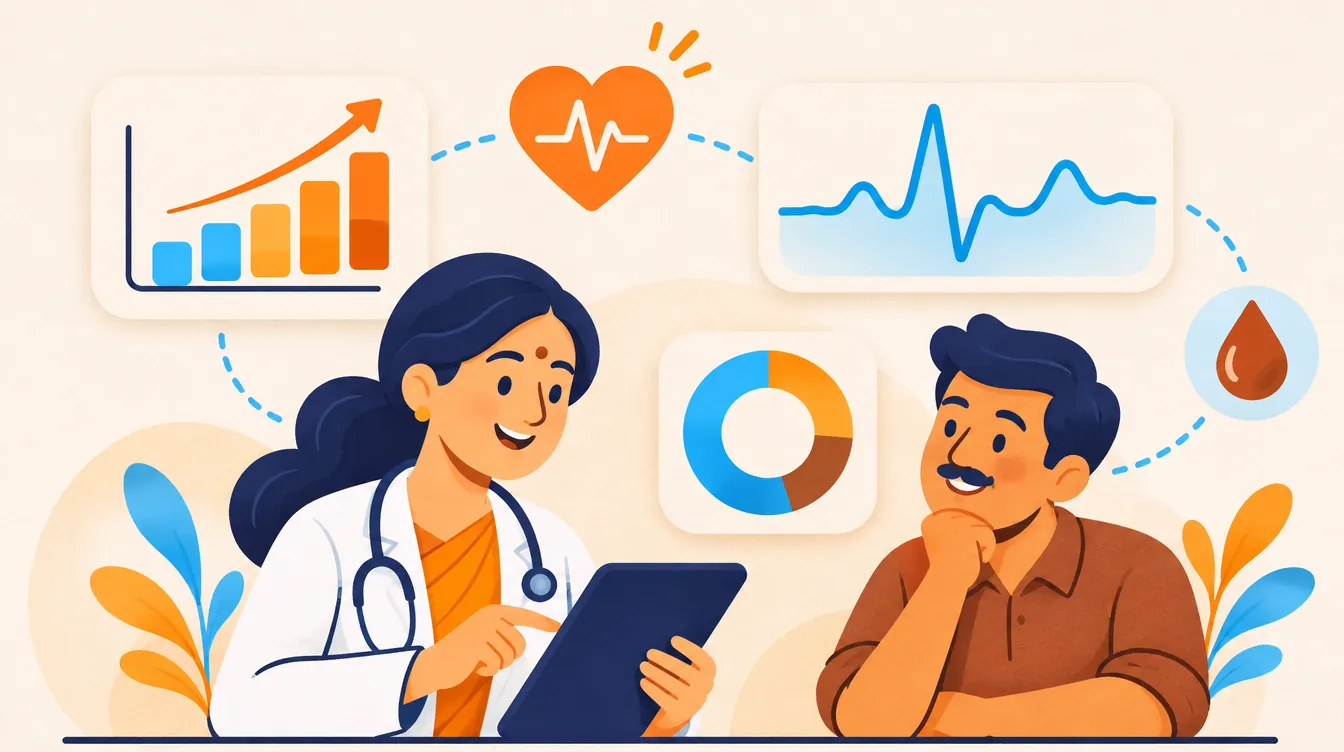
For a health kiosk, this means a blood pressure, blood sugar or lipid reading taken at a camp or PHC no longer has to end up as a lost paper slip. Once it is linked to ABHA, the next doctor the person sees can view it, if the person agrees. Our guide to ABHA integration on health kiosks explains this step by step.
Where an ABHA kiosk helps, and its limits
An ABHA-enabled kiosk is most useful where someone is screened in one place and later seen by a different provider. Examples include an Ayushman Arogya Mandir, a district hospital OPD, a workplace health day and a community camp.
- Less retyping: sharing the profile cuts manual data entry at busy counters.
- Continuity of care: a screening result can follow the person to their doctor.
- Cleaner records: digital entries are easier to count and review than paper registers.
Practical limits
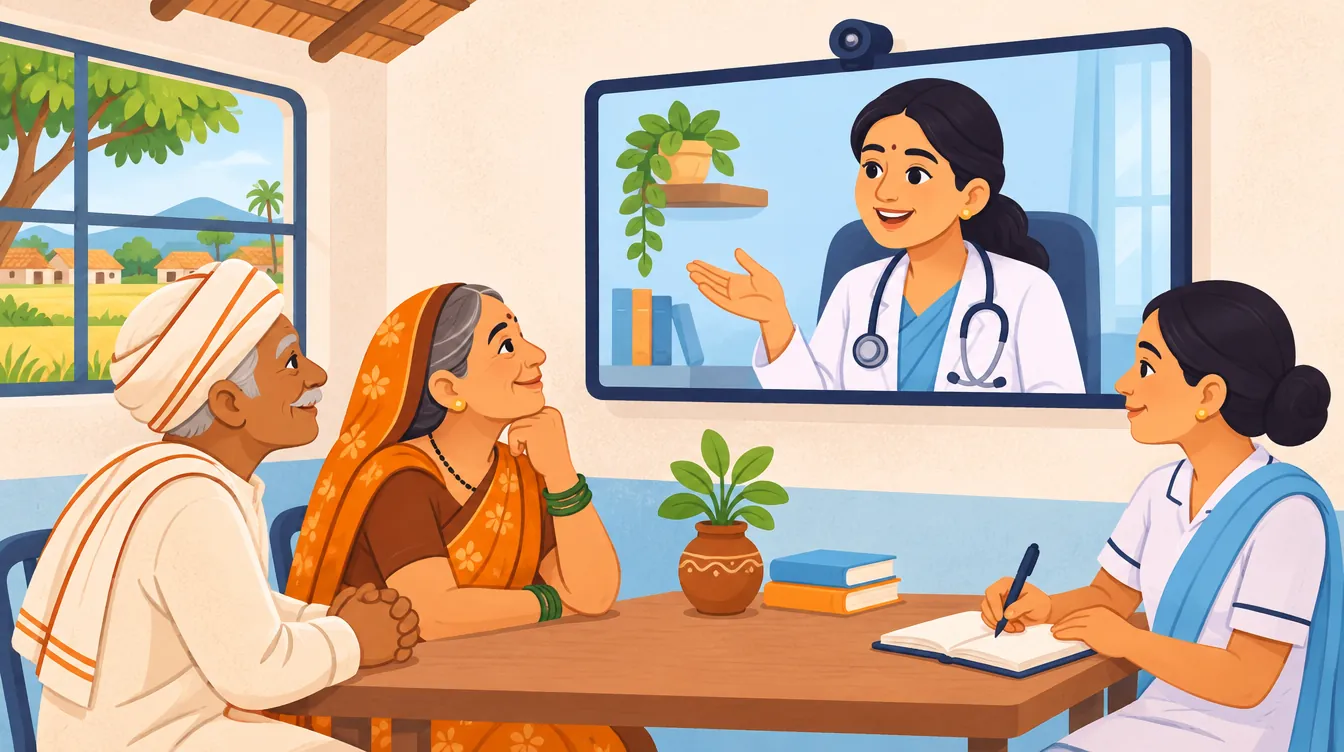
Scan and Share needs a phone and an ABDM-enabled app, so older people and those without smartphones may need help from staff or an ASHA worker. Internet connections vary, so ask whether a kiosk keeps working offline and syncs later. And a kiosk reading is a screening result: a doctor reviews it and decides what happens next.
If a reading is very high, or someone has chest pain, breathlessness or fainting, don't wait for a report. Call 112 or 108 straight away.
What it means for buyers and programme managers
ABDM also gives facilities a financial reason to use these tools. In March 2023, NHA said it had added Scan and Share transactions to its Digital Health Incentive Scheme (DHIS). DHIS pays incentives to health facilities and digital solution companies based on how many ABHA-based digital transactions they handle. The terms can change, so check the current ones on the ABDM website before you plan around them.
Before you buy an ABHA kiosk or write it into a tender, ask these questions:
- Can the kiosk register a person with their ABHA, and can it link screening reports to ABHA once the person consents?
- Is the site registered on HFR, and who acts as the Health Information Provider for kiosk records?
- How is consent recorded, and how can a person withdraw it?
- Where is the data hosted, and how does the vendor meet the DPDP Act 2023?
- Does the kiosk keep working without internet, and how does it sync afterwards?
- Who will train operators to help people who don't have smartphones?
For the wider picture for government buyers, see our page on how health kiosks fit into ABDM.
Where Cloudspital fits
Cloudspital makes AI Health ATMs at its own facility in Greater Noida, Uttar Pradesh. Its CPL-HA range has 10 models, covering 48 to 170 tests and parameters. The software includes ABHA and ABDM integration, cloud records and a dashboard. Reports print at the kiosk and reach people by SMS and WhatsApp. A doctor reviews results on video, and the kiosk works offline and syncs later. Data is hosted in India, in line with the DPDP Act 2023.
For hospital OPDs, Ekaay.AI Reception handles registration by voice or typing, in Hindi or English. ABHA verification and creation on it are coming soon. For now, patients type their name, age and gender.
A good next step is to read the ABHA integration details for Health ATMs. Then book a demo or request a written quote to see how it would work at your site.
Sources
- ABDM milestone: over 104 crore health records linked with over 93 crore ABHA, Press Information Bureau, Government of India
- Update on the implementation of Ayushman Bharat Digital Mission (ABDM), Press Information Bureau, Ministry of Health and Family Welfare
- ABHA-based Scan & Share service helps over 10 Lakh patients save time spent in hospital queues, Press Information Bureau, Ministry of Health and Family Welfare
- The Ayushman Bharat Digital Mission (ABDM): making of India's Digital Health Story, PubMed Central (peer-reviewed journal article)
- A brief guide on Ayushman Bharat Digital Mission (ABDM) and its various building blocks, National Health Authority, ABDM
How this article was made: drafted with AI assistance, checked against the sources above, and read and approved by the Cloudspital team before publishing. It is general information, not medical advice.